07 / 08
The Neon Hieroglyph: Point Cloud Environment
- Three.js
- GLSL
- React
- WebGL
About the project https://virtual-factory.co.uk
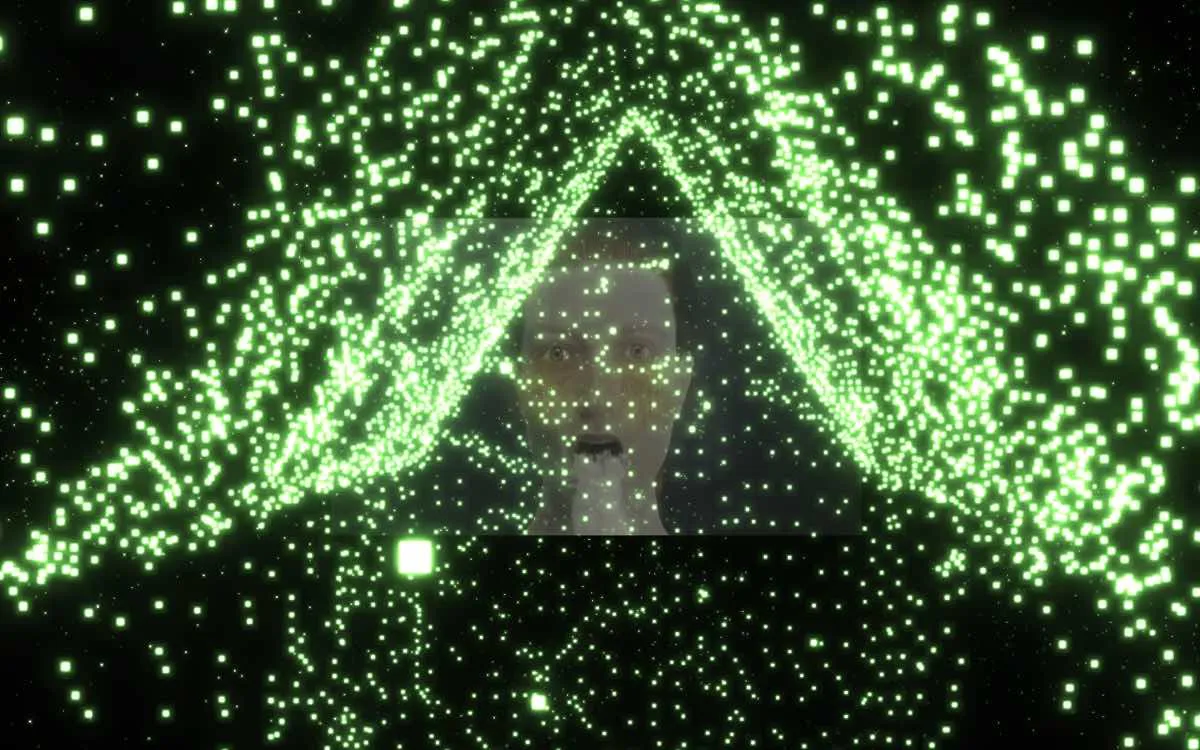
A point-cloud environment for Tai Shani’s The Neon Hieroglyph, her first online artwork, commissioned by Manchester International Festival.
The work is nine stories drawing on her research into ergot, the rye fungus LSD derives from, with a score by Maxwell Sterling. It was presented on Virtual Factory, MIF’s online platform, designed and built by Knoth & Renner. I came in freelance for the creative coding: the three-dimensional space a viewer moves through before reaching the video.
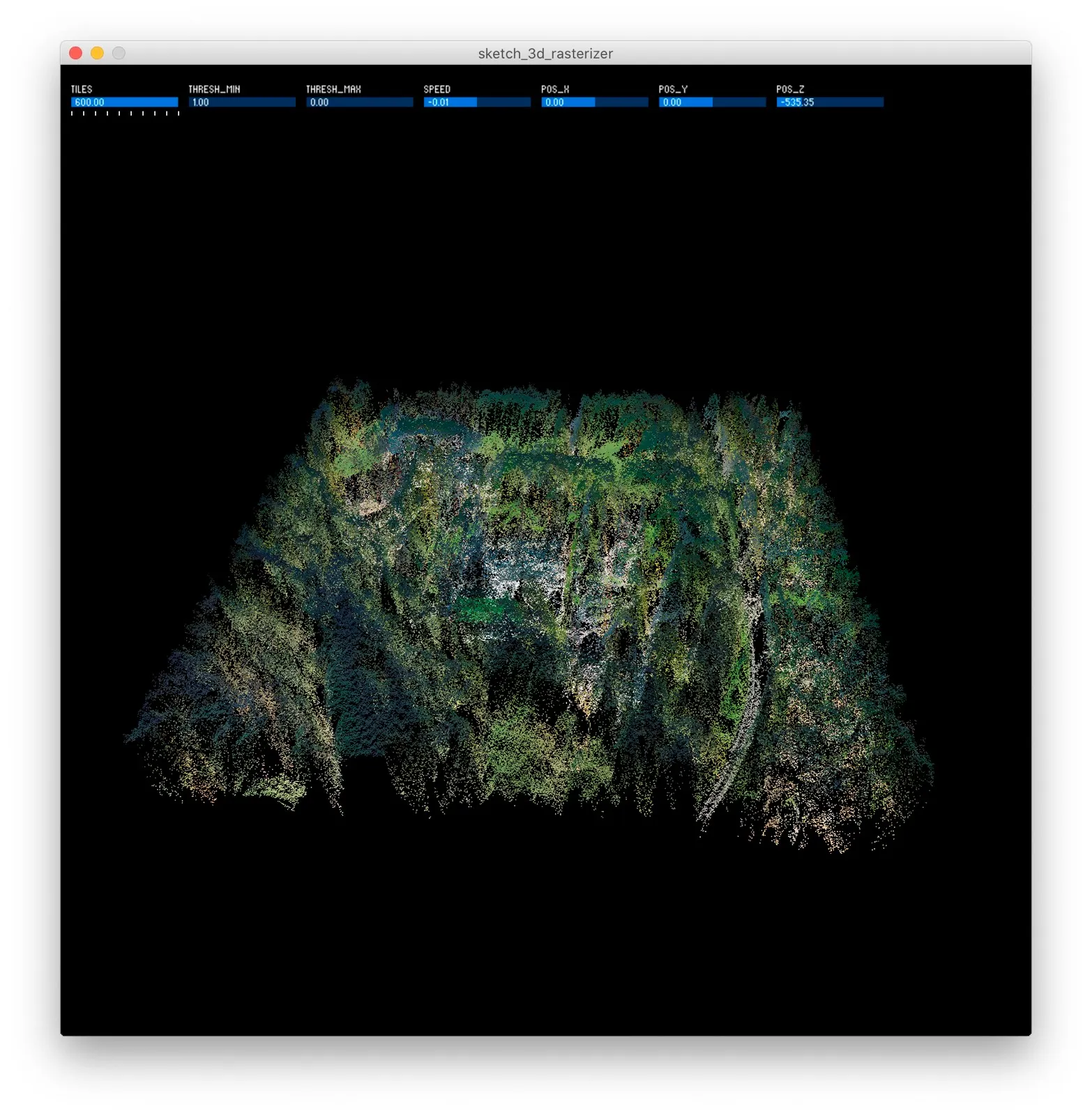
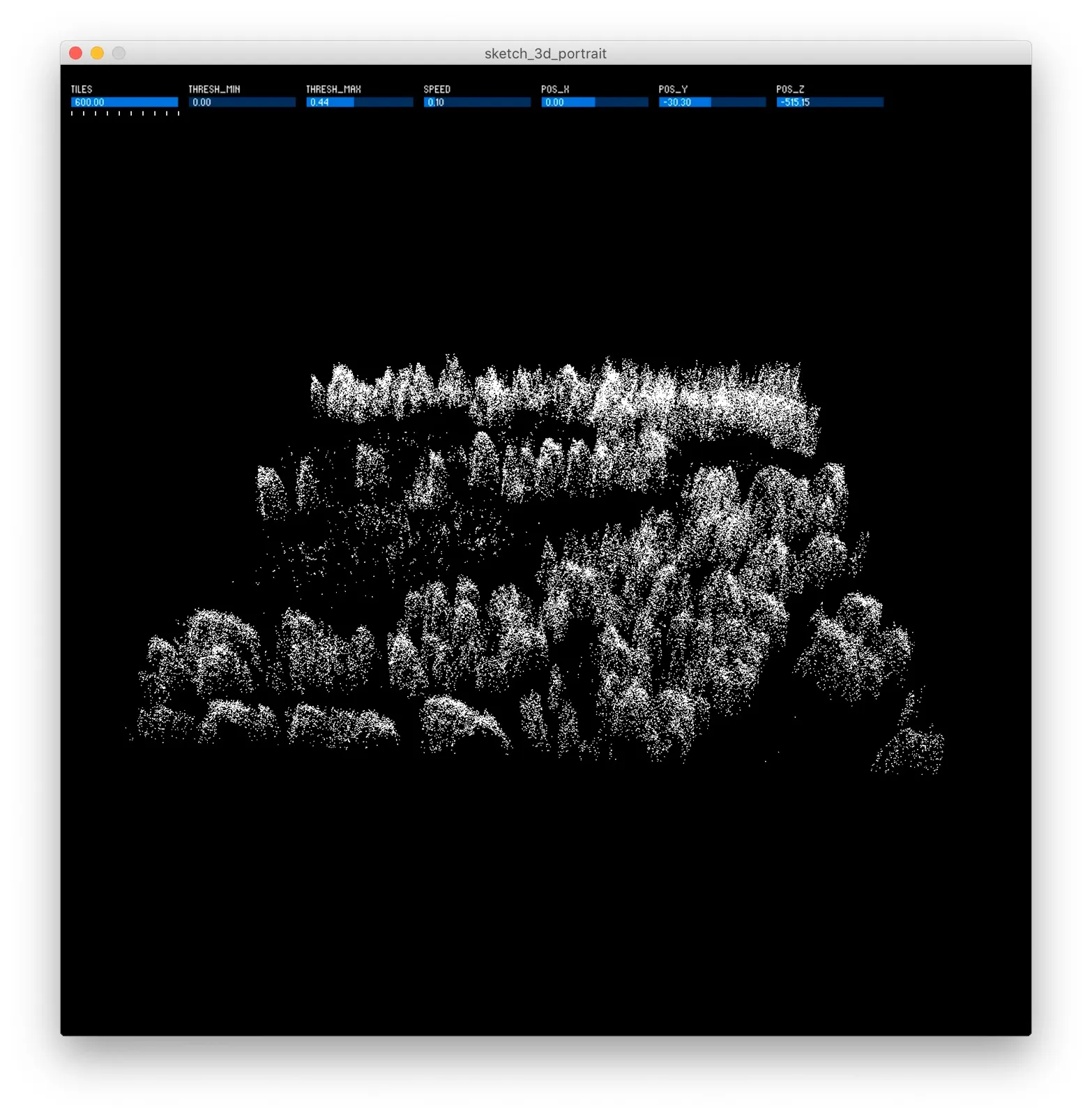
The approach came from a sketch the summer before. Push each pixel of a photograph along the z-axis by its brightness and the image becomes a cloud of points. It is not physically correct, but forests come close to real depth maps: the tree tops catch the light and everything below them sits in shadow.
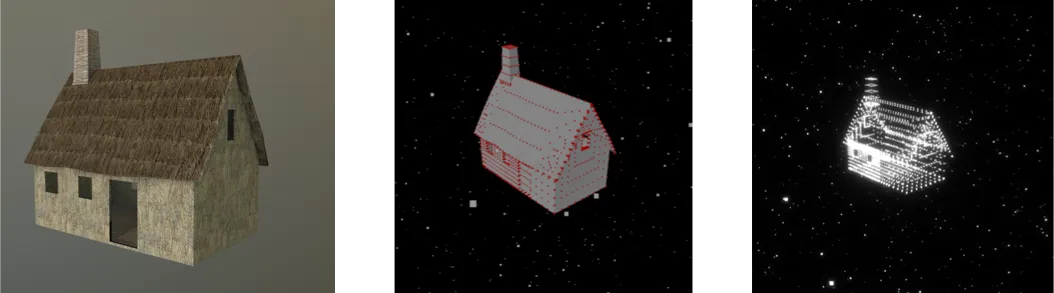
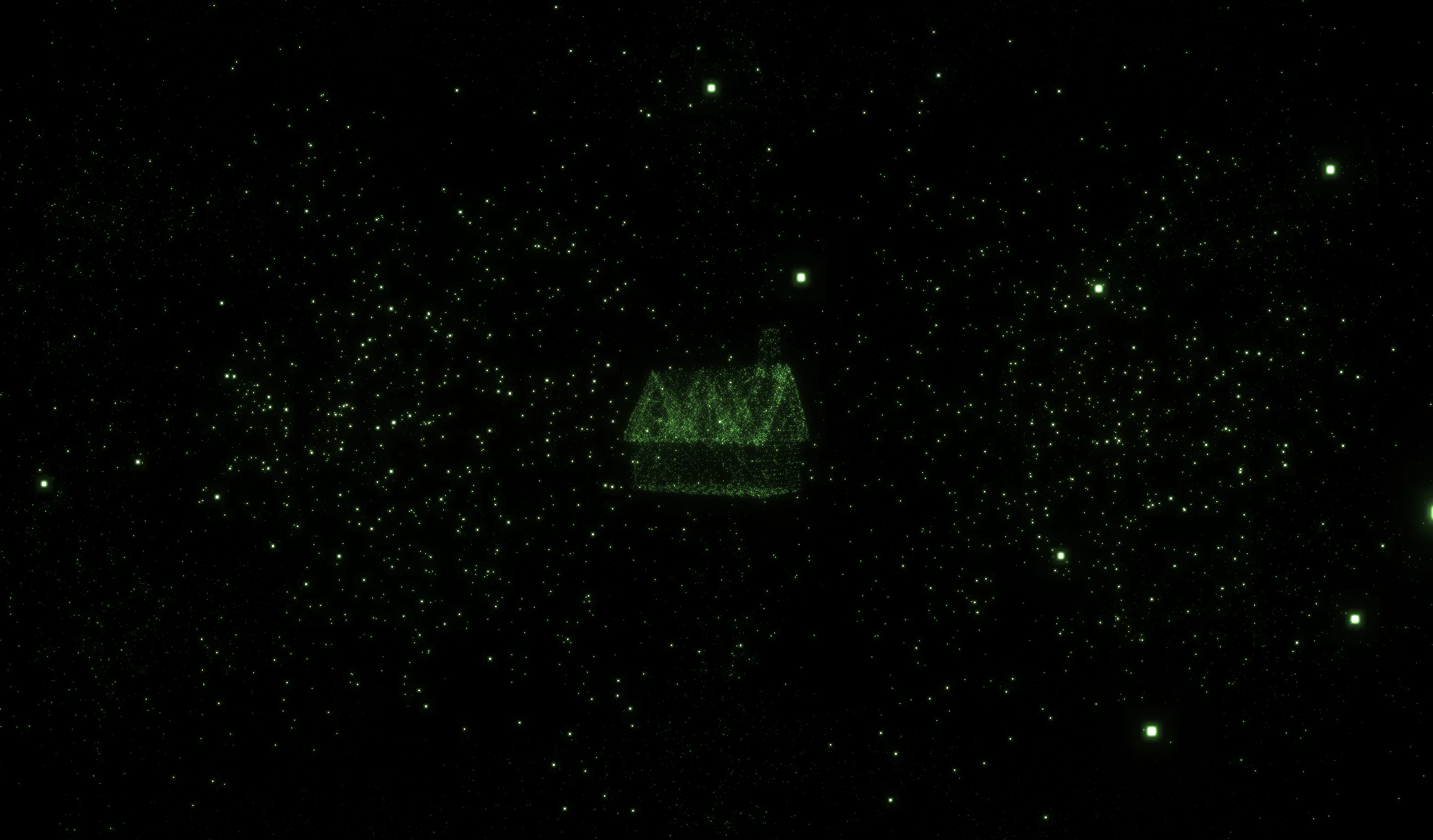
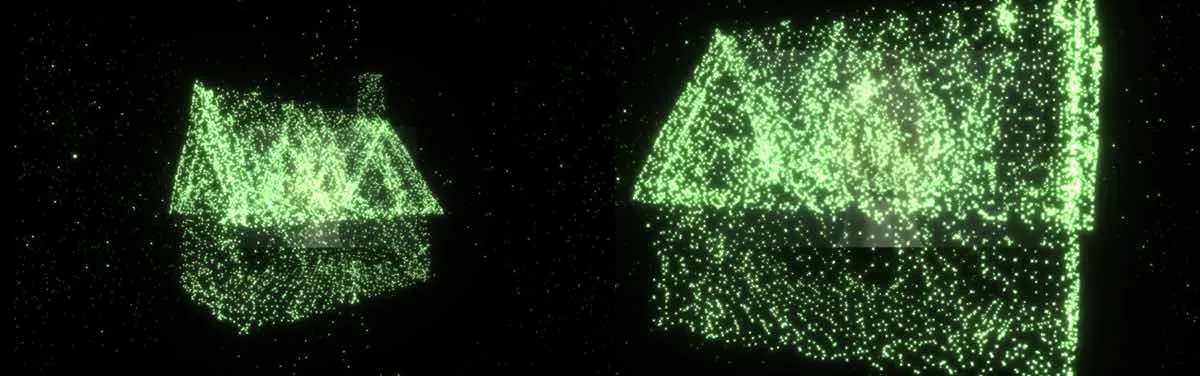
The central hut is drawn as points only. Its vertices are read out of the model and rendered as a cloud, so what survives is a silhouette, a structure implied rather than built. That suited a work about hallucination.
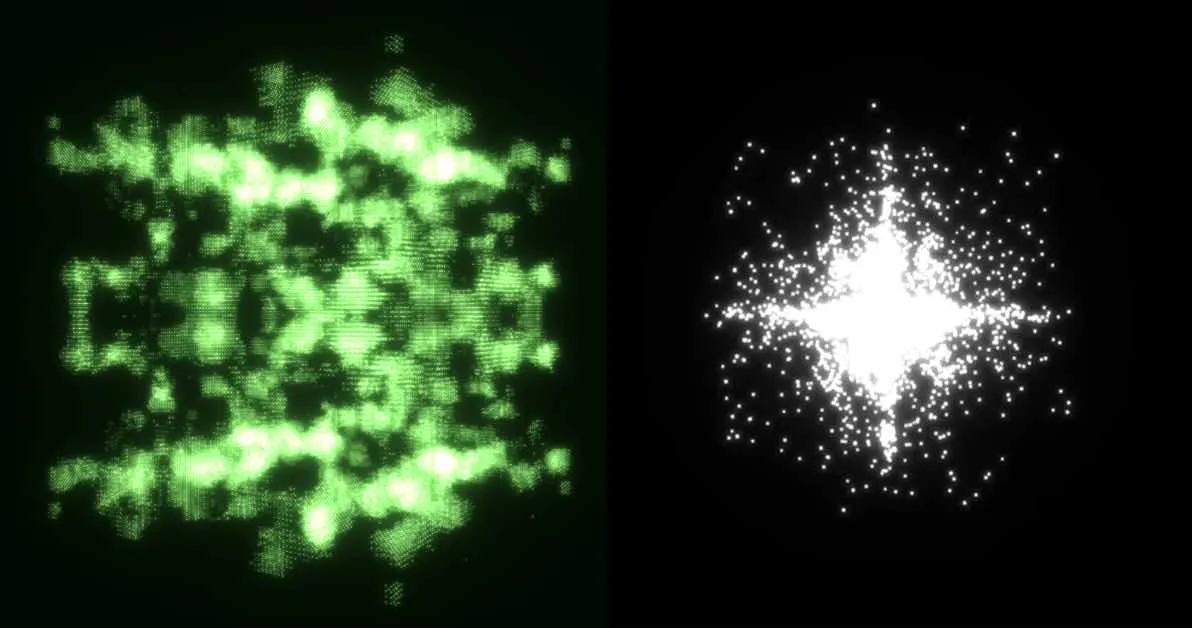
The field around it is generated. A seeded 3D Perlin noise is sampled across a grid, and a point is placed wherever the value crosses a threshold. Random placement spreads too evenly to read as anything; noise clusters, and the octave count sets how tightly. The field is sampled once into a single buffer and turns as a whole, which is enough movement for something that sits behind the work.
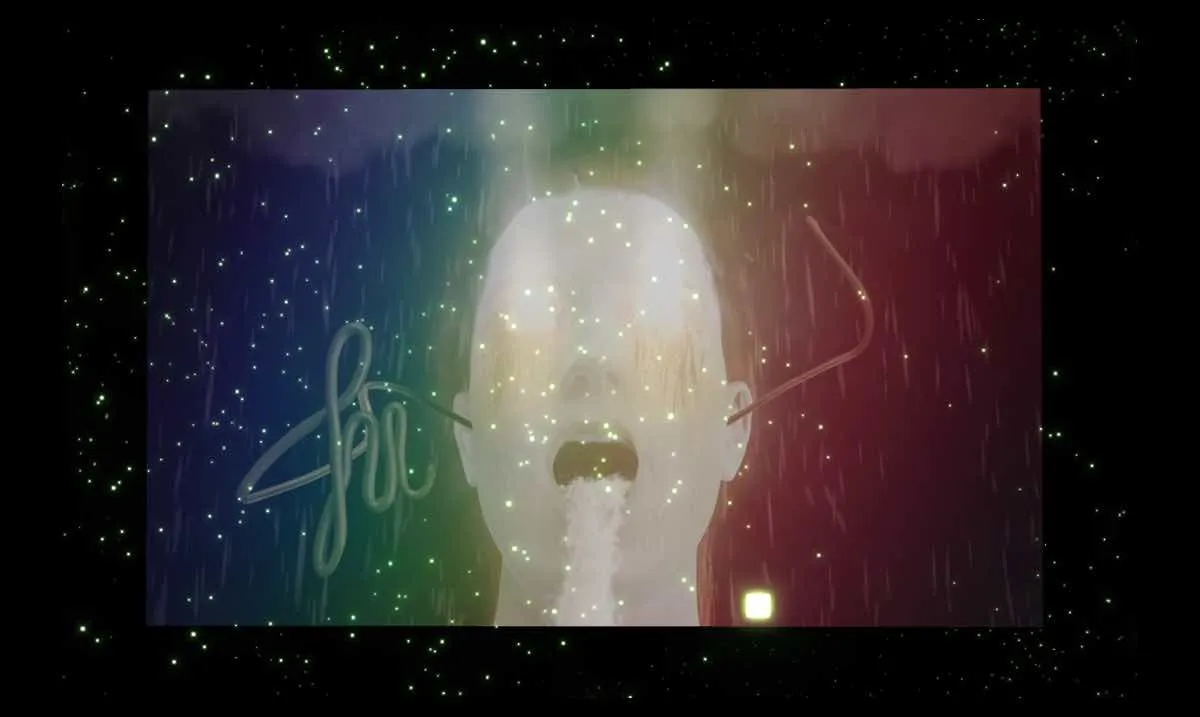
Bloom applies to the point clouds only, so the video canvas stays flat and legible. A second pass renders the scene with everything that should not glow in flat black, then blends it over the base render.
Platform: virtual-factory.co.uk. Design and build: Knoth & Renner.