10 / 10
Liquid Simulations
- RealFlow
- Cinema 4D
- Maxwell Render
- Z-Printer
- Prusa
- Resin
- Dual-filament printing
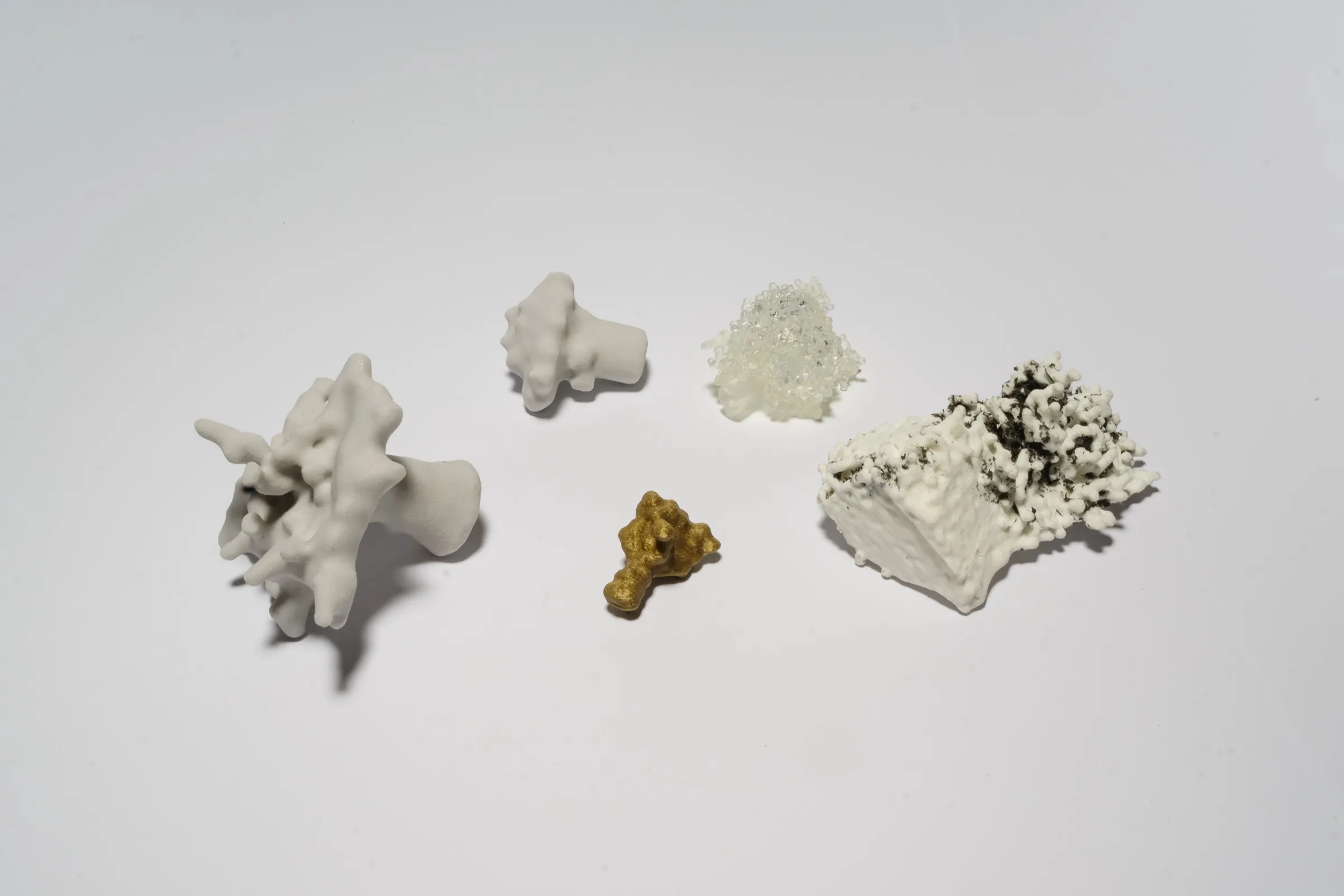
Fluid simulations, stopped at a single frame and 3D printed. Made in the 3D Lab of the Royal Academy of Art, The Hague.
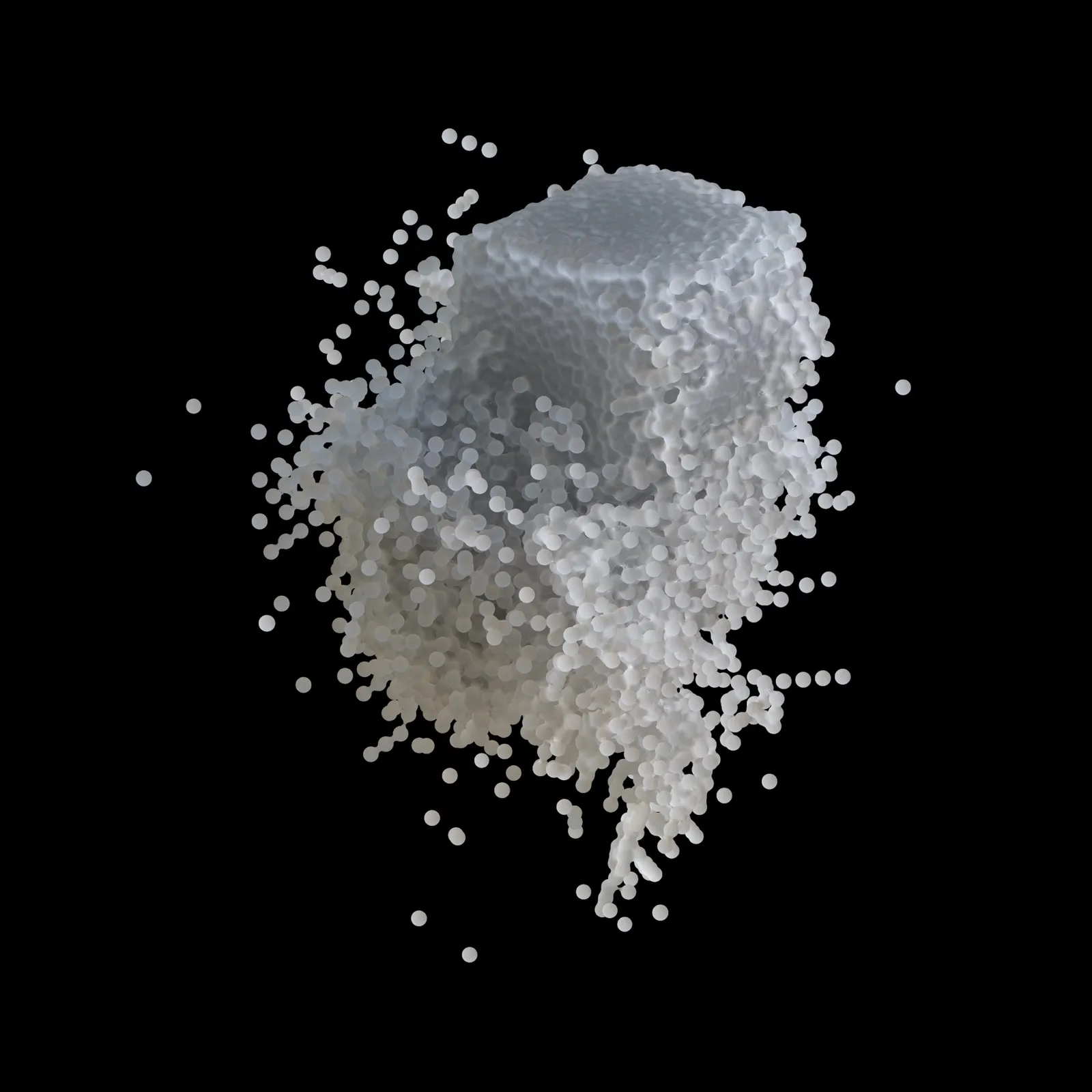
RealFlow is made for film, built to look convincing rather than to be correct. I wanted to see how close it gets to nature anyway. Closer than I expected: varying viscosity and the force of collisions, one simulation kept producing shapes that had nothing to do with liquid, an anthill, a tree crown. None of it was modelled.
I set up the liquids and how they collide, and RealFlow calculates the rest. I pick one frame, close it into a mesh and print it.

The brief was to try two or so of the lab’s printers. I used all five, and each made something different of the same kind of shape. A Prusa needs supports under overhangs, and the fine parts break off when they come away. The Z-Printer works in powder and needs none, so it could print the thin, hollow forms the others couldn’t, which is why its prints became vessels.
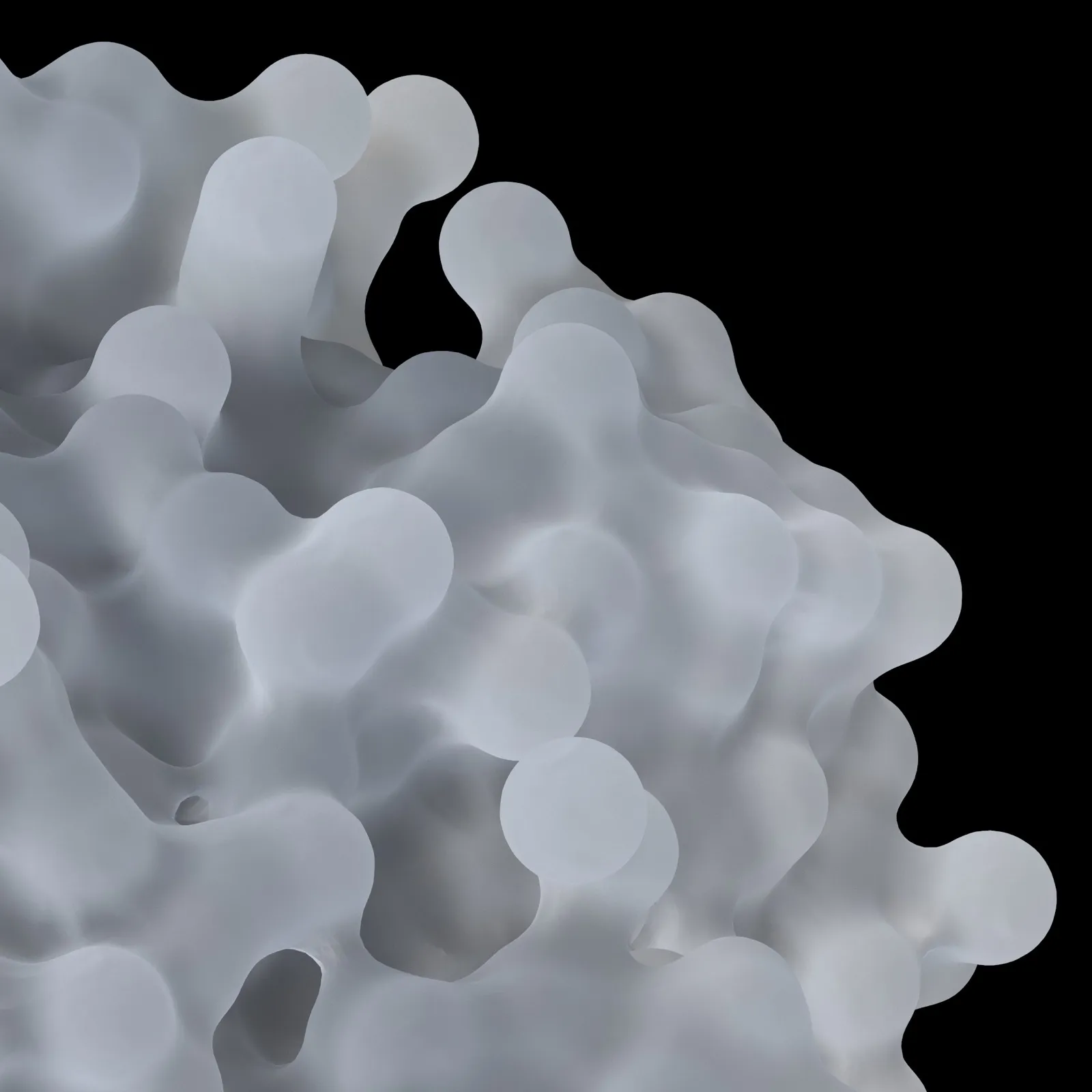
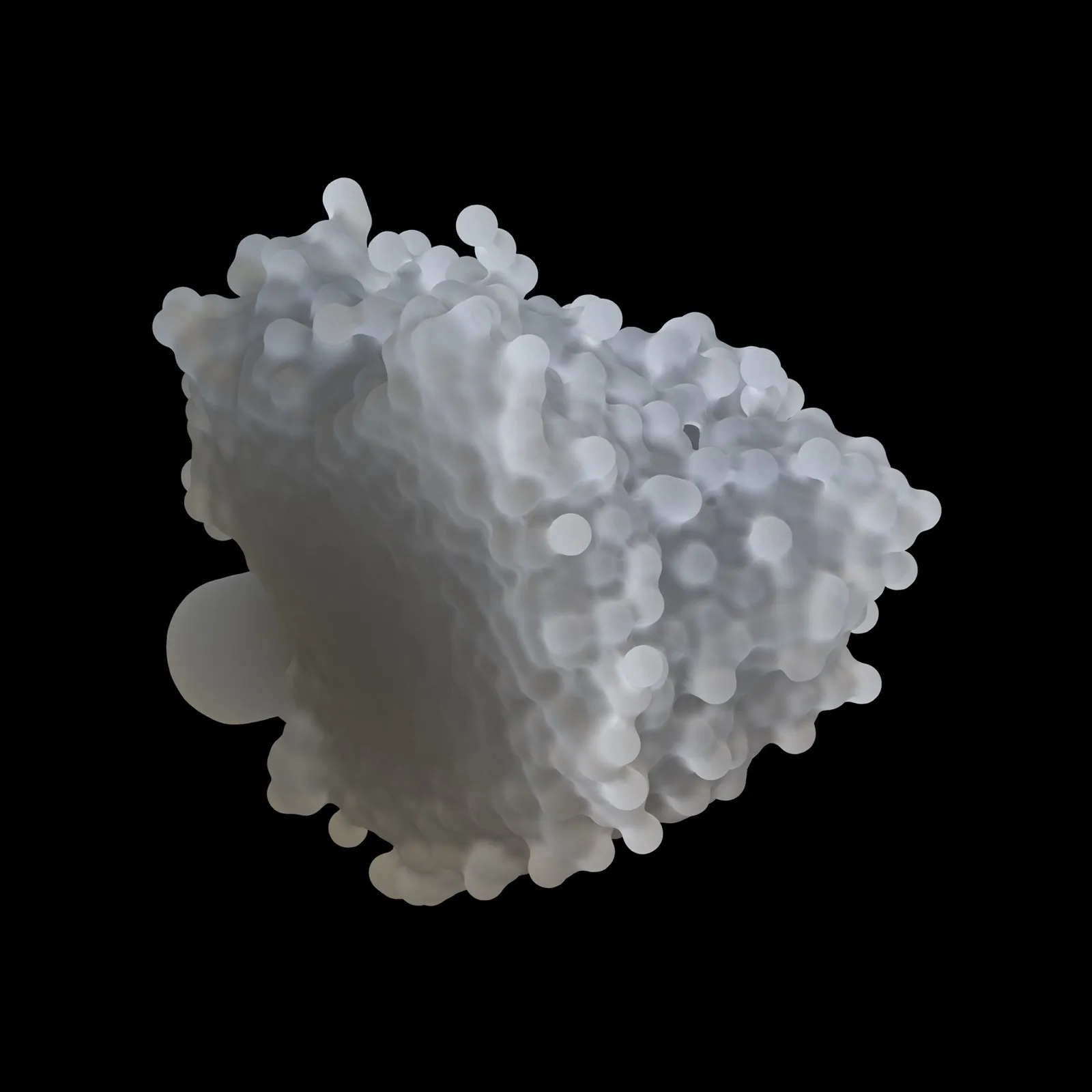
The prints are the work. The renders are documentation, made in Cinema 4D with subsurface scattering, so light enters the surface a little before it bounces back, as with skin. Without it, a shape this soft looks like plastic.
One of the Z-Printer pieces was sold as a small vase.