09 / 10
Marching Band
- Unity
- NavMesh pathfinding
- TerraLand
- Melown VTS
- Satellite and elevation data
- Real-time simulation
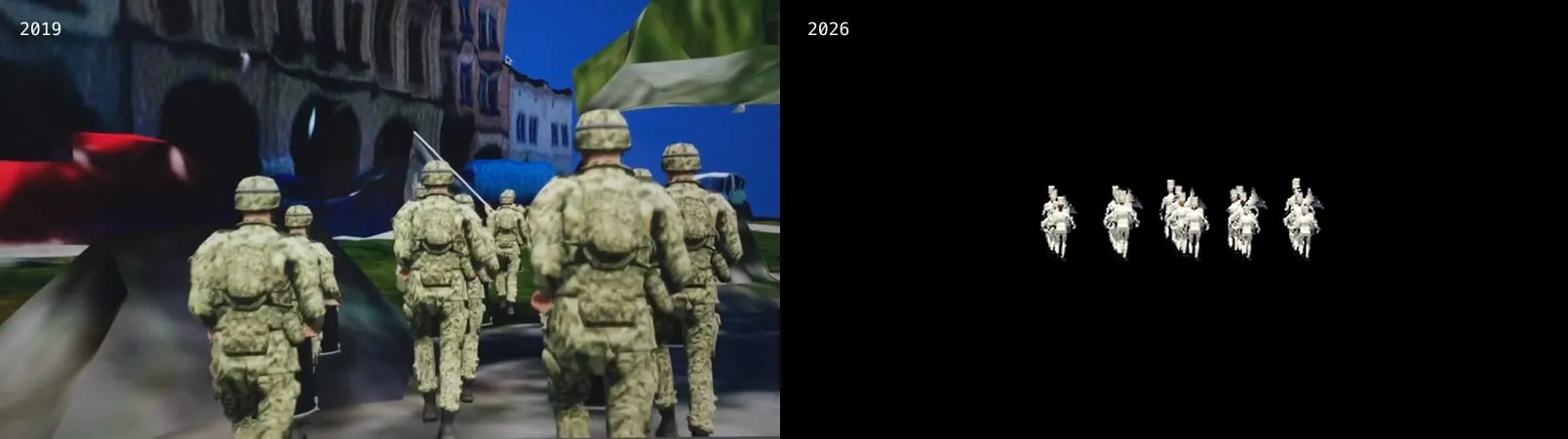
A marching band walking through a landscape with nobody in it, on a route the software picks. My BA graduation project at the Royal Academy of Art, The Hague.
It came out of my thesis, Understanding Nationality, which asked whether a nation-state is a natural extension of the family or exists only in the heads of the people who belong to it. It opened on a line from Benedict Anderson:
The members of even the smallest nation will never know most of their fellow-members, meet them, or even hear of them, yet in the minds of each lives the image of their communion.
A marching band is a literal version of that: a nation performing itself, in formations made to be read from a grandstand. Here there is no grandstand. And the flags are white, a nation parading under the sign of surrender.
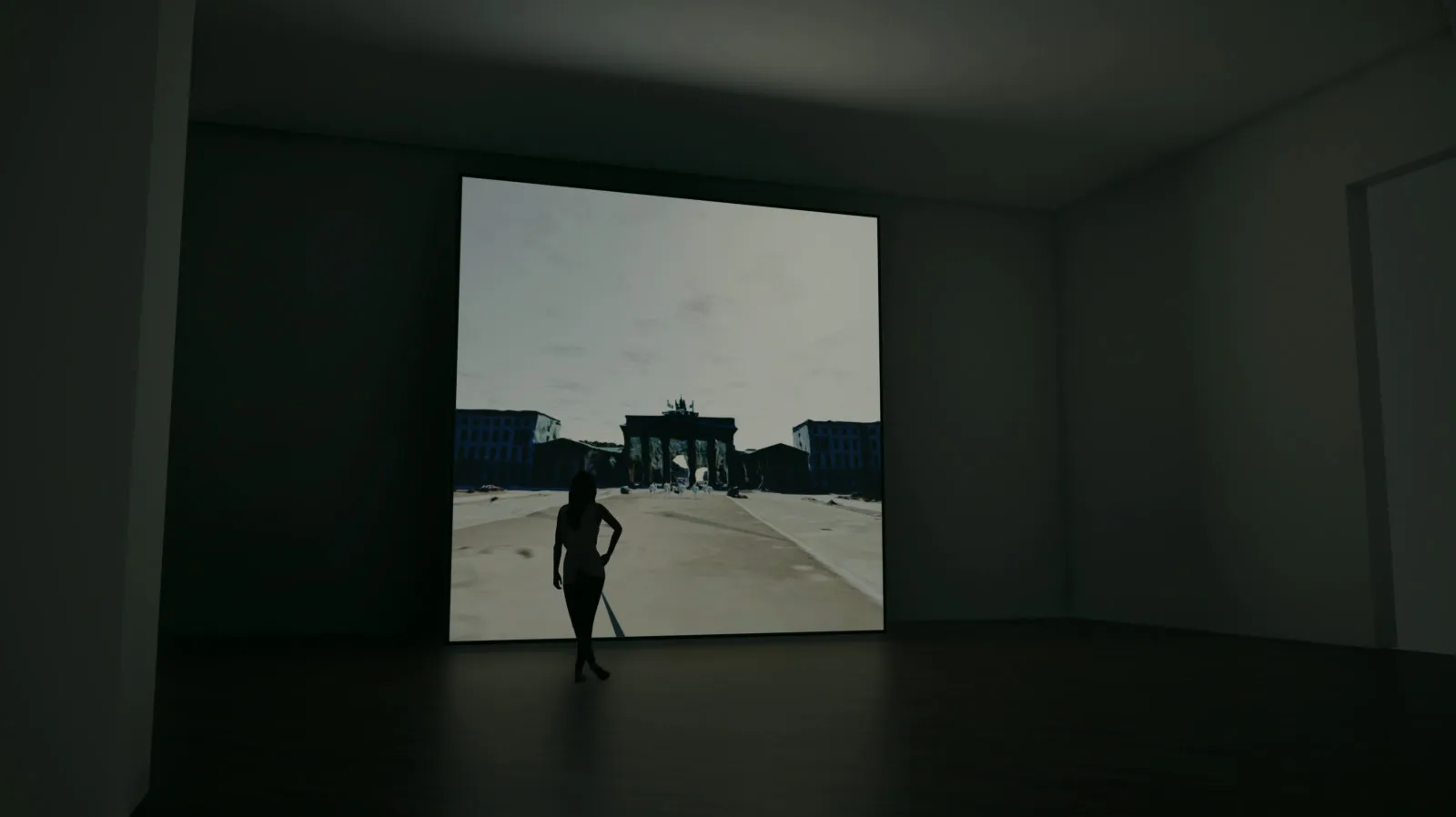
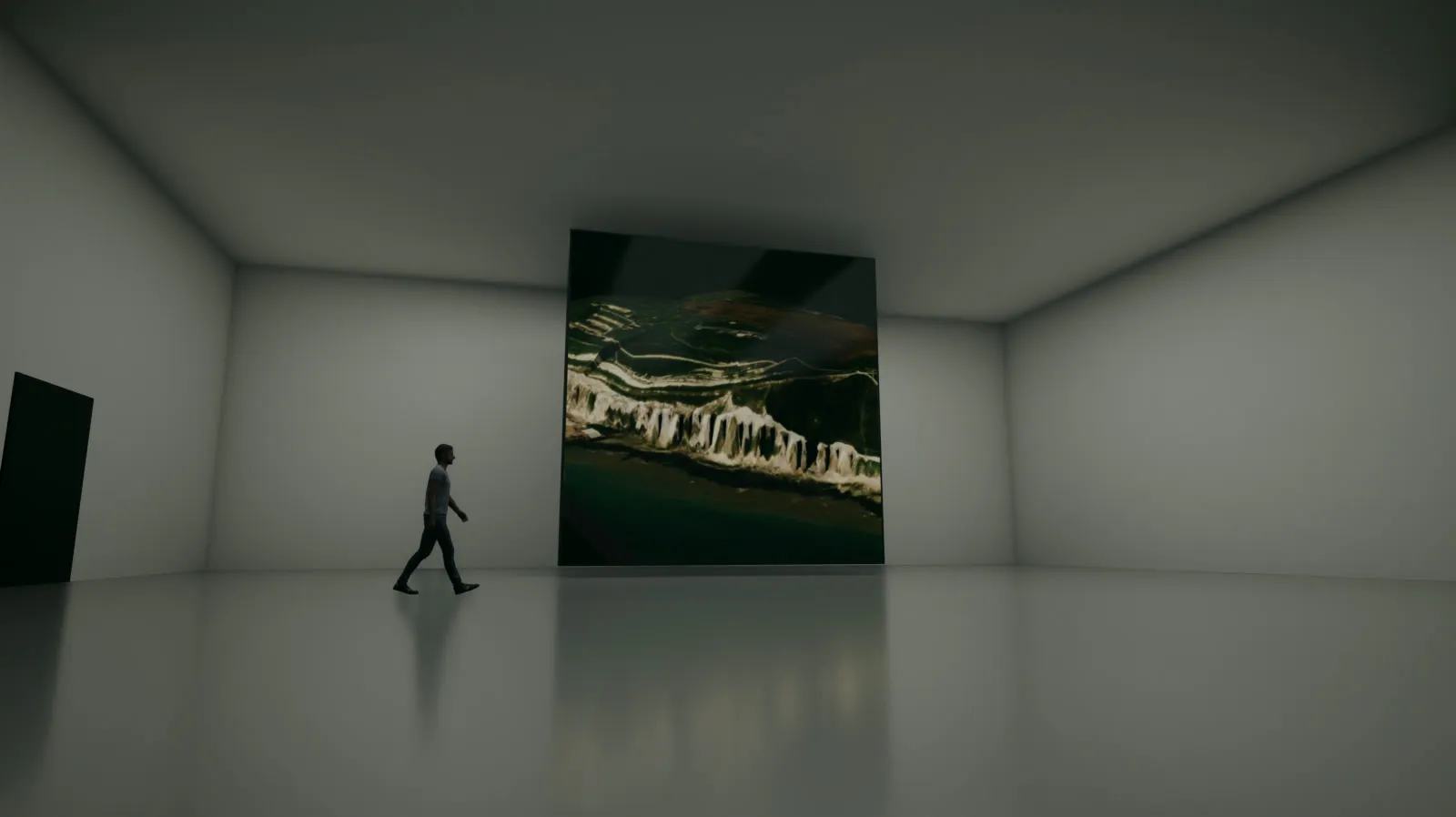
The landscape is real, built from satellite images and elevation data, with every building and person taken out.
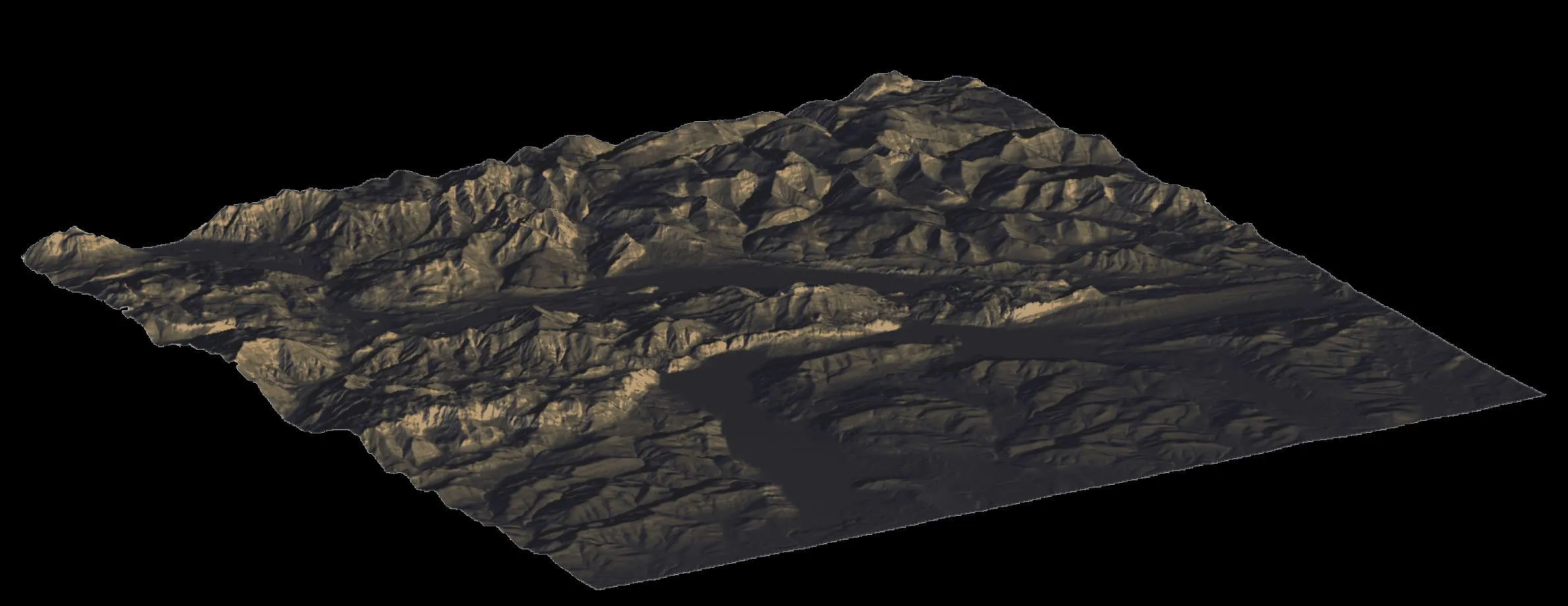
It never exists all at once. The map streams in tiles from Melown’s map service as the band moves and is discarded behind it, so the band could walk anywhere on the planet and the land exists only around it. If a nation exists only as long as people imagine it, this one’s ground exists only where it is being performed.
Nobody choreographed the route. I set parameters, and Unity’s pathfinding avoids what is too steep and walks through what it can. Sometimes it gets stuck, and the band marches on the spot against a slope it cannot get around. I didn’t plan that, and it became the image the piece was looking for: a parade that exists to be watched, stuck in an empty corner of a country with nobody there. I made it as a German watching populism grow across Europe.
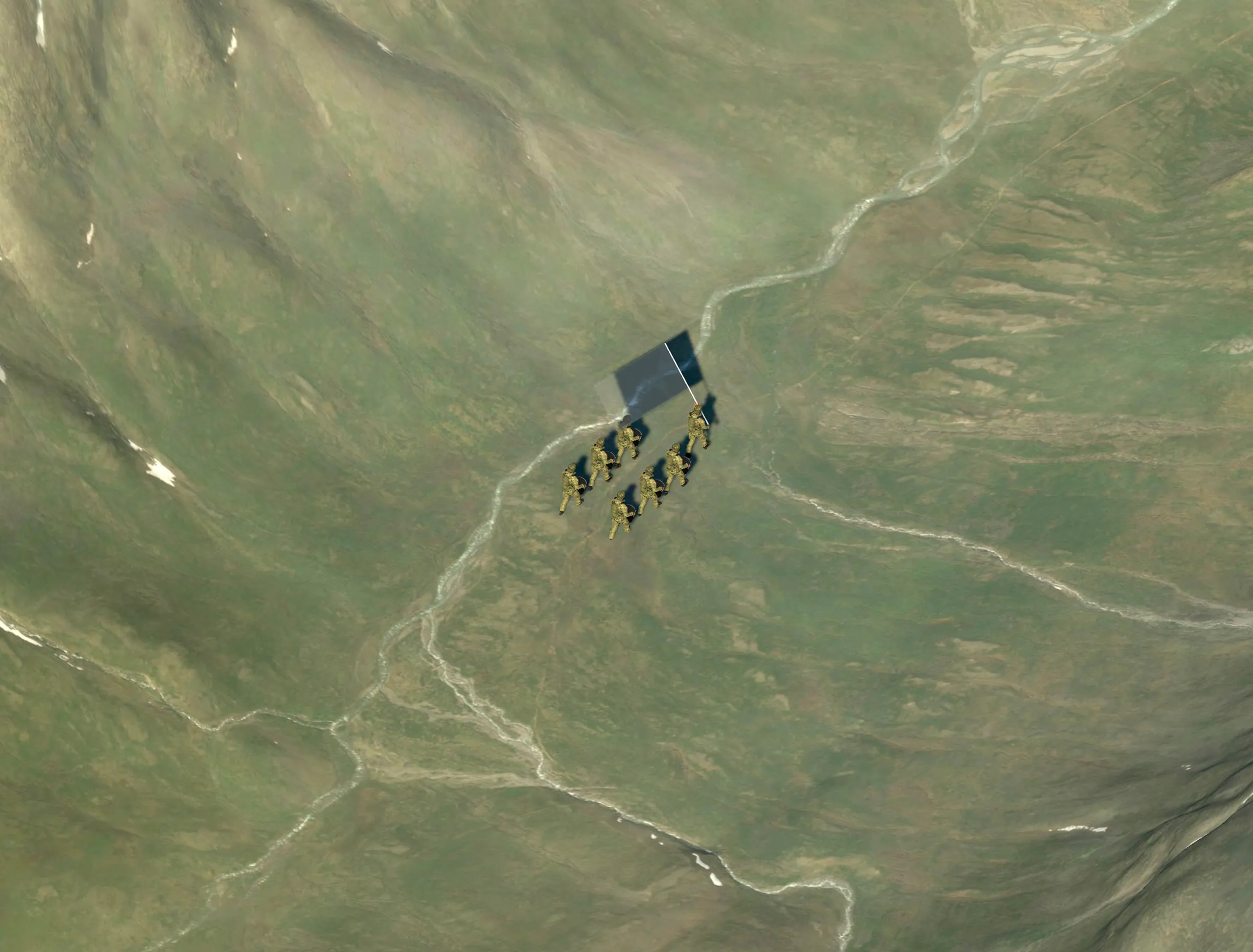
The reference was John Gerrard’s real-time simulations of real places. The light follows the time of day at the screening, nothing is animated by hand, and the same settings never produce the same walk twice.
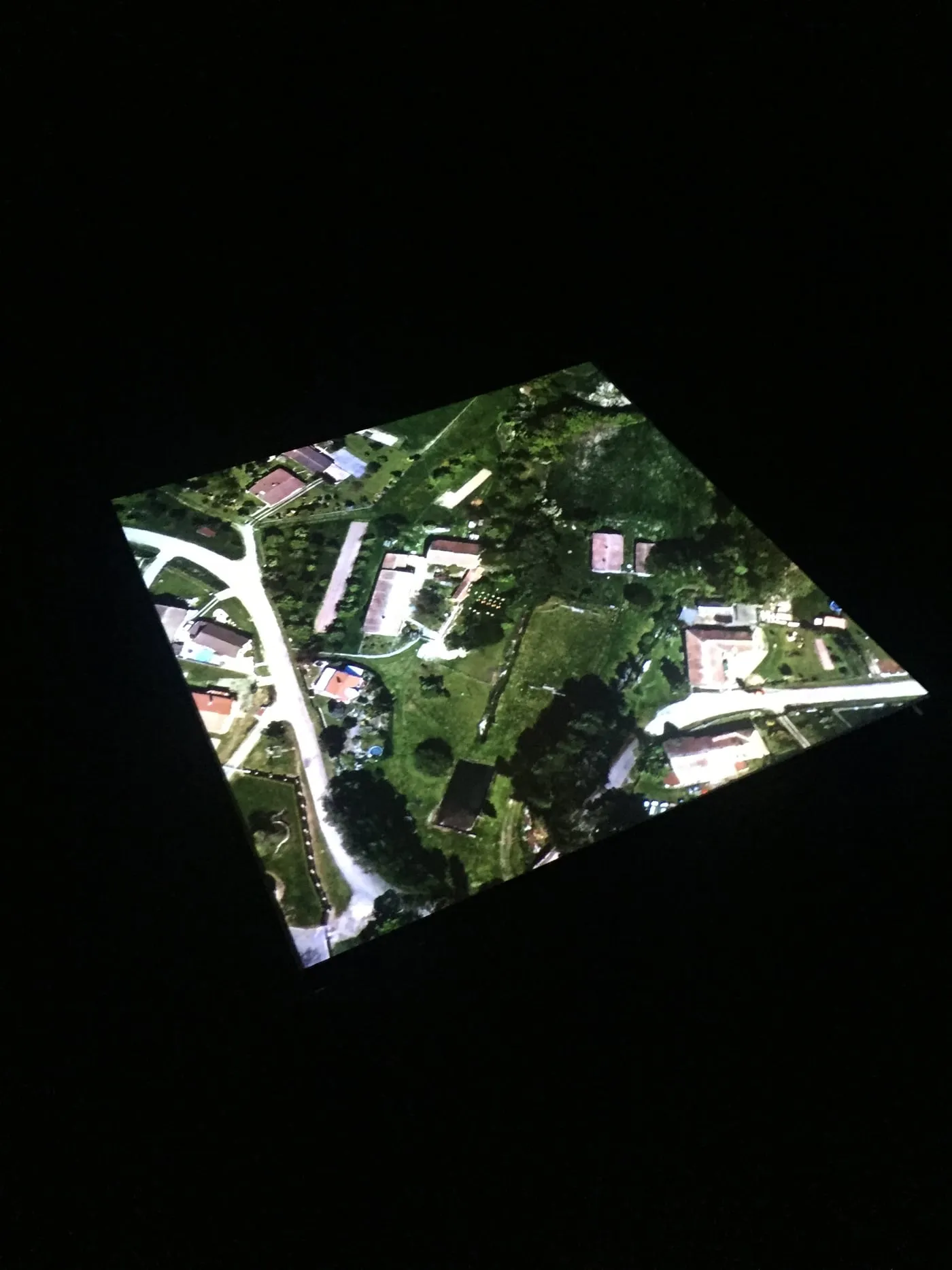
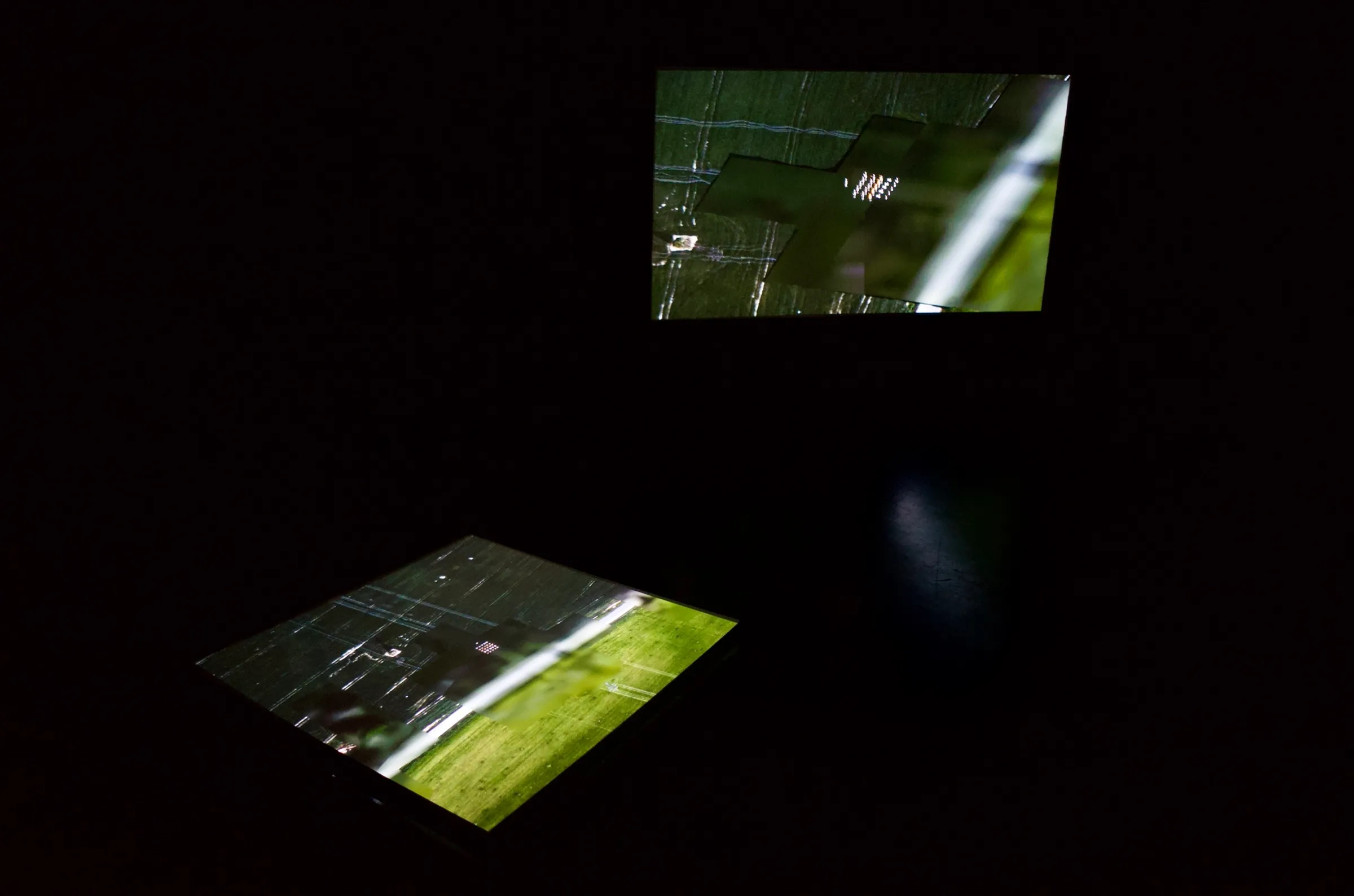
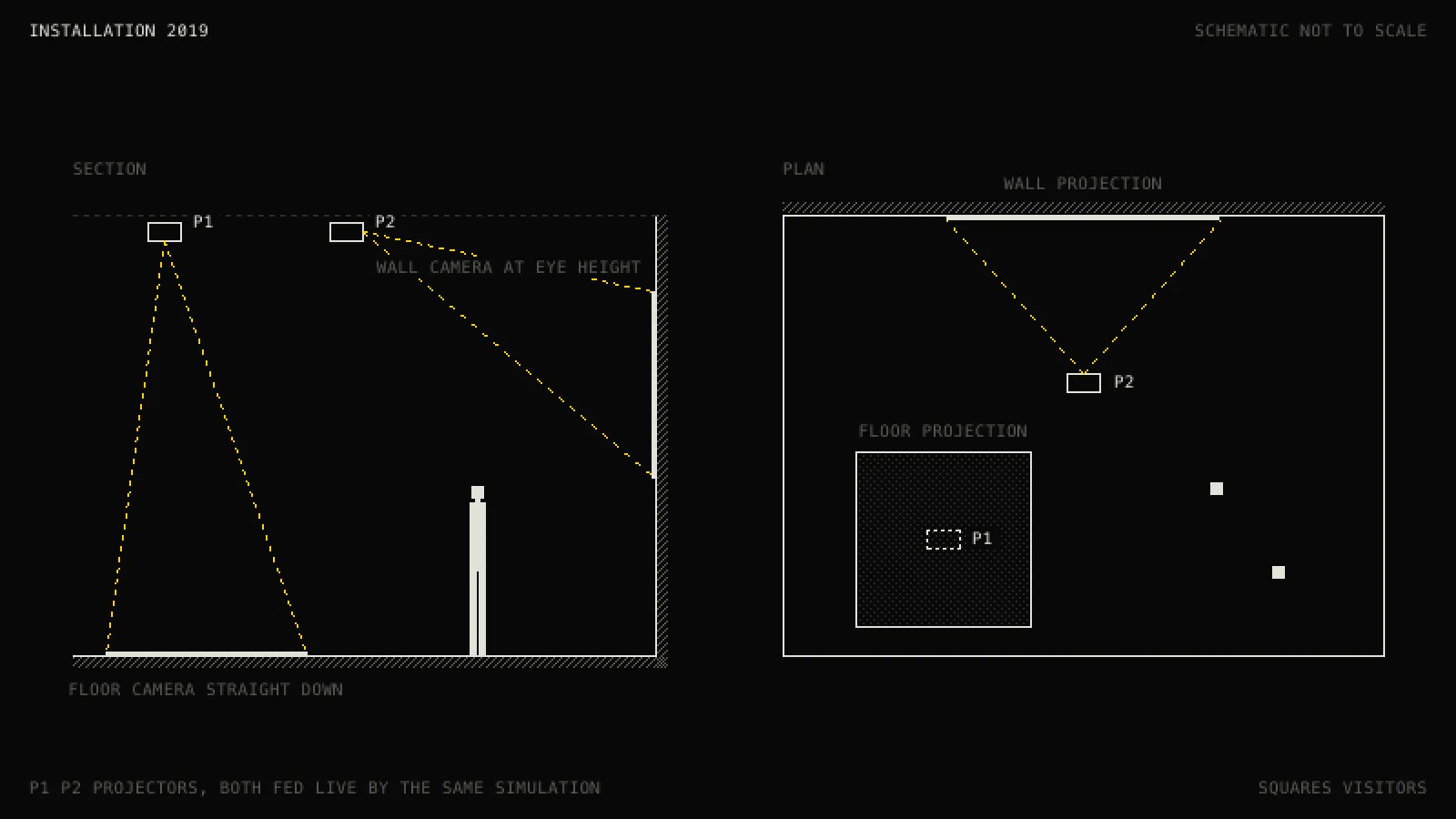
It was shown on two projectors running the same simulation live, one looking straight down onto the floor and one on the wall at eye height.
The ground was always borrowed. The map service no longer exists, so the 2019 build, started today, gets no land. The band still marches, on nothing.